Lost an AI citation? Check this before you panic
Half or more of AI citations are gone by the next day, and about 75% of lost ones return. What to check before you rewrite anything.

Short on time?
Short on time? Here's what I would do.
- You have no tracker and just noticed a drop
- Access check, then wait a week
- Confirm the page is indexed, can show a snippet and allows OAI-SearchBot, read Search Console's generative AI report, then re-check. Don't rewrite for one missing day.
- You pay for a tracker
- Days cited out of the last seven
- Log the count per question and mark empty answers separately. Act on a drop that lasts weeks, and look at Google rankings before the copy.
- You are shopping for one
- The tool that shows empty answers and the seven-day count
- Pay for daily runs only if that is the only way to get the count. One dashboard loss is not a reason to buy.
- The drop lasts and Google rankings fell too
- Treat it as a Google problem first
- Then read the page that replaced you. Edit your own page last.
Prices verified . Verified 24 Nov 2026. The picks are my reading of public pages and one vendor's study; this post has no runs of my own. No vendor paid to be included, and sponsors can't buy a verdict.
Your tracker says a citation you had last week is gone. Before you touch the page, know that in Ahrefs’ 20-day study half or more of cited sites were missing by day two, and about 75% of the lost ones came back.
I read 12 pages on 24 November 2026 to work out the order I would check things in. For the wider topic, start at my AI visibility hub.
Is one missing citation a real signal? #
Usually not. In Ahrefs’ 20-day study, 50% to 83% of the sites cited on day one were gone by day two, and about 75% of the lost ones came back within 20 days.
Ahrefs published it on 29 October 2026. It followed about 37,500 cited sites across 7,831 questions on five tools, checking every day for 20 days (Ahrefs). Ahrefs sells Brand Radar, so this is a vendor’s own data, built on its own questions.
| Tool | Questions followed | Gone by day two | Cited a week or more | Cited all 20 days |
|---|---|---|---|---|
| AI Overviews | 563 | 50% | 18% | 6.6% |
| AI Mode | 1,996 | 58% | 19% | 6.8% |
| ChatGPT | 3,173 | 59% | 13% | 4.0% |
| Gemini | 1,276 | 81% | 0.3% | 0.2% |
| Copilot | 823 | 83% | 1.9% | 0.5% |
Source: Ahrefs, 29 Oct 2026. Shares are of sites cited on day one. Read 24 Nov 2026. Scroll sideways for more columns.
The return numbers matter more than the loss numbers. About half of lost citations came back within 3 days, and 20% to 27% never did (by tool). Ahrefs says two other Brand Radar reports put the return rate nearer two in three.
Ahrefs states its own limits: it followed only each site’s first disappearance, and a site that dropped late had less time to return. Its advice is to count how many of the last seven days you were cited, and not to credit a page edit for a single comeback.
Question type matters too. On ChatGPT and AI Mode, around 64% to 76% of cited pages changed from one day to the next whatever the question type, and Ahrefs says “best X” questions were among the least stable. So losing a “best X” citation is weaker evidence than losing a question about your own brand (my reading).
An older Ahrefs study measured something else: 43,000+ keywords, with AI Overview content changing on average every 2.15 days and 54.5% of cited URLs carried over between responses (Ahrefs, Nov 2025). I don’t compare the two, because one counts whole answers and the other each cited site. I cover it in Google keeps testing AI Overview citations.
Was the answer empty, or did someone replace you? #
Look at whether the answer cited anyone. In Ahrefs’ study Gemini answers had no citations 64% of the time and Copilot 53%, against under 1% for ChatGPT, AI Overviews and AI Mode.
That changes what a “loss” is. Only 4% of Gemini questions and 27% of Copilot questions had citations on all 20 days. In what Ahrefs calls Report B (22 questions about Ahrefs itself), 68% of lost Gemini and Copilot citations came when the next answer cited no one, against about 1% on Google’s tools.
So on Google’s tools a lost citation usually means another source took the slot (my reading, on a small sample), while on Gemini and Copilot it often means nobody was cited. Here is how I sort what a dashboard shows.
| What you see | What it may be | What Ahrefs found | First check |
|---|---|---|---|
| No citations at all in the answer | The engine cited nobody | Gemini 64% and Copilot 53% of answers; under 1% on ChatGPT, AI Overviews and AI Mode | Re-check the next day and log “empty” separately |
| A different site holds your slot | You were replaced | On Google's tools about 1% of lost citations came with an empty next answer (22-question brand set) | Read the page that replaced you next to yours |
| Cited yesterday, gone today, only there one day | Probably churn | 34% (AI Overviews), 41% (AI Mode) and 35% (ChatGPT) of one-day citations never returned | Wait, and count days |
| Gone after weeks of being cited | More notable | Never returned: 4% (AI Overviews), 2% (AI Mode), 0.7% (ChatGPT) of citations that lasted 8 to 14 days | Check access, then Google rankings |
| Link gone, brand still named | A link loss, not a visibility loss | Next day, brand still named: Gemini 40%, Copilot 31%, AI Mode 16%, ChatGPT 13%, AI Overviews 12% | Track mentions apart from citations |
Source: Ahrefs, 29 Oct 2026; the “what it may be” and “first check” columns are my reading. Read 24 Nov 2026. Scroll sideways for more columns.
The last row is easy to miss. In cited answers the brand wasn’t named 54% of the time on ChatGPT and 84% on AI Mode, so a link and a mention are different things. Ahrefs grouped brand-name variants with AI help, and a manual check by Glen Allsopp found 30% to 36% of apparent losses were the same brand under another name, so Ahrefs calls its mention figures “slightly conservative”.
Can the engine still reach and show your page? #
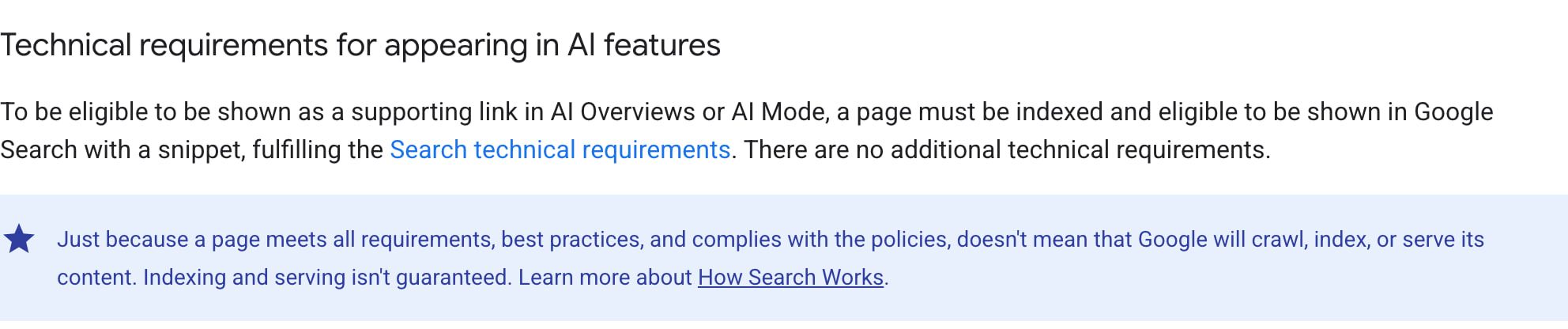
Check this before anything else. Google says a page “must be indexed and eligible to be shown in Google Search with a snippet” to appear as a supporting link, and ChatGPT needs OAI-SearchBot allowed to crawl the site.
Google’s AI features page adds “There are no additional technical requirements” and “Indexing and serving isn’t guaranteed.” Robots.txt rules for Googlebot manage access, and nosnippet, data-nosnippet and max-snippet limit what can be shown (Google). It also says AI Mode and AI Overviews “may use different models and techniques, so the set of responses and links they show will vary.”
OpenAI’s help page says to “allow OAI-Searchbot to crawl the site” and to allow OpenAI’s published IP addresses at your host or CDN. It says “Placement is not guaranteed” and “Search results and citations can be incomplete, outdated, or incorrect” (OpenAI). It also says ChatGPT “may search the web automatically”, so not every answer uses search at all.
If a firewall or CDN rule is the suspect, my guide to allowing AI agents through a firewall covers it.
Then look at what Google reports for your URLs. Search Console’s generative AI report shows impressions of your URLs in AI features in Search and Discover, by page, country and device (Google, 3 Jun 2026). The announcement lists no queries or clicks, so treat it as an exposure check. I explain how to read it in Search Console and AI Overviews.

Did the whole platform move? #
Sometimes, and when it does, many pages drop on the same dates. The cleanest example I read is Reddit’s share of ChatGPT citations in August 2026, and nobody has confirmed why it fell.
Semrush’s blog, using Promptwatch data, reports that Reddit held 3.8% of ChatGPT citations from 18 July to 7 August and then averaged 0.5% on 14 to 17 August, a fall of 86% (Semrush, 26 Aug 2026). It notes a query fan-out change on 8 August but says the cause is unconfirmed, and Promptwatch calls the size provisional and can’t rule out a problem in its own collection. As Semrush relays it, OpenAI told Yahoo Tech it doesn’t set a fixed level of visibility for individual sites.
seoClarity saw swings in its own data. For 8 February to 27 April 2026 across five markets, it reports ChatGPT citation volume fell 86% to 94% across all markets and rebounded in May. It says two platform shifts “appear to be” behind that, which is its inference. Its conclusion is the useful part: “The clearest signal in the data isn’t decline; it’s volatility.” (seoClarity, which sells Clarity ArcAI.)
What to do with that: if several unrelated pages of yours lost the same engine on the same dates, it looks platform-wide, and rewriting one of them is the wrong response. That check is my suggestion, not a finding from either source.
I’d leave the Gemini 3 story alone. Pepper says Gemini 3 became the AI Overviews default on 27 January 2026 and “replaced 42 percent of the domains it had previously cited”, with no named source (Pepper), and Frase credits the 42% to SE Ranking, which I didn’t open (Frase). Neither page shows that this change caused any particular loss, so I treat it as a claim, not a finding.
Did you also drop in Google? #
Check, because pages that rank in Google for a question held citations longer in Ahrefs’ data. On AI Overviews 29% of ranking pages stayed cited for a week or more, against 4% of pages that didn’t rank.
The split is similar on AI Mode (28% against 4%) and ChatGPT (11% against 4%). The ranking analysis covers 230 questions, and Ahrefs says it shows correlation, not cause. Ranking isn’t required either: about 75% of AI Mode and ChatGPT citations, and nearly half of AI Overview citations, came from pages that did not rank for the question.
Lily Ray’s write-up points the same way on a small sample.
She followed 11 subfolders hit by an unconfirmed mid-January 2026 Google update. Organic fell 5.7% to 53.1% between 20 January and 16 February, and all 11 lost AI citations too, averaging 22.5% against 26.7% for organic (Lily Ray). Her line: “the fastest way to lose visibility in AI search might be to lose it in Google first.” The sample was chosen and the link is correlation. She infers that ChatGPT may lean on Google, and nothing I read confirms it.
The free check is Search Console: compare the page’s clicks and position before and after the date you noticed.
When is it worth changing the page? #
When the loss has outlasted the weeks in which most losses reverse, and access and Google rankings are fine. That rule is mine, built from Ahrefs’ numbers, not advice from Ahrefs.
The numbers: about half of lost citations returned within 3 days and about 75% within 20 days. Citations that had lasted 8 to 14 days almost always came back (0.7% to 4% never did), while a third or more of one-day citations never returned. So a loss after a long run is more interesting than a loss of something new. I won’t put a figure on “long enough”, because the data doesn’t give one.
My working rule, labelled as mine: re-check daily for at least a week before editing, and write down each day whether you were cited. Log an empty answer as empty. If another page holds your slot, read it next to yours before changing anything.
The fixes in the vendor guides are unproven on their own pages. Pepper’s steps include an answer in the first 80 words, refreshing before rewriting and planning for “a 60 to 120 day recovery curve”; Frase’s playbook covers entity refresh, FAQ schema and a freshness loop. I found no sourced data on either page showing these restore a lost citation, and both vendors sell something that gains when you worry. Crawler access is the exception, because it is free to check and both Google and OpenAI describe it.
Seer’s study of ChatGPT’s reasoning is a reading list, not evidence. It reports five reasons for dropping an option that Seer drew from ChatGPT’s reasoning summaries, on 20 prompts sent through the OpenAI API on 4 November 2026, and calls the API “directional” to what happens in the app (Seer, which sells consulting).
What do the sources actually support? #
Only the Ahrefs study has a stated sample, a daily method and stated limits. The rest are single-domain, small, inferential or unsourced.
| Source | Who made it, and what they sell | Sample | What it can't show |
|---|---|---|---|
| Ahrefs, Oct 2026 | Ahrefs: Brand Radar | About 37,500 cited sites, 5 tools, 20 days | Causes; anything past each site's first disappearance |
| Ahrefs, Nov 2025 | Ahrefs: Brand Radar | 43,000+ keywords, about a month, not daily | A true change rate (the authors say it is likely higher) |
| seoClarity, Jun 2026 | seoClarity: Clarity ArcAI | “Millions of interactions”, 5 markets, 8 Feb to 27 Apr 2026 | Why volume fell; its shift dates are inference |
| Promptwatch via Semrush, Aug 2026 | Semrush and Promptwatch: both sell tools | One domain's share of ChatGPT citations | The cause; Promptwatch can't rule out its own collection |
| Lily Ray, Feb 2026 | An SEO consultant | 11 subfolders hit by one unconfirmed update | Cause, or any other site; the sample was chosen |
| Seer, Nov 2026 | Seer: consulting and a tracing tool | 20 prompts via the API, one model | App behaviour; the author says “directional” |
| Pepper, Jul 2026 | Pepper: a GEO platform | None stated for its numbers | Any of its figures; they name no source |
| Frase, Apr 2026 | Frase: content tools | Figures credited to other firms | That its fixes work; its “70+ score” claim has no data |
Source: The pages linked in this post and in the source list. Read 24 Nov 2026. Scroll sideways for more columns.
Every page here comes from a company that gains when you believe citations are worth watching, and I found no neutral study with daily data.
What should your tracker show you? #
Three things: days cited out of the last seven, empty answers labelled separately, and mentions kept apart from citations. A tracker that shows only a green or red mark per prompt hides all three.
These are the questions I would ask a vendor, built from the Ahrefs findings:
- Does it separate an empty answer from a replaced citation?
- Does it show days cited out of the last seven?
- Does it keep brand mentions apart from citations?
- How often is each prompt run, and on how many samples?
The seven-day count needs a check every day, so a weekly run gives you one reading in seven. That is why I’d pay for daily runs only when it’s the only way to get the count (my judgment). Sizing and cadence are in how many prompts to track.
For one example, Advanced Web Ranking’s help page lists AI Visibility KPIs, a view of keywords where you’re missing (its “active losses”), Citations and Cited Competitors columns, an organic rank cross-check and brand aliases. It suggests monitoring weekly and states no plan limits (AWR). AWR sells a tracker, and I have not seen the tool itself. Without a tracker, measuring AI visibility with or without a tool shows a free version of the same log.
So what would I do? #
Run the checks in this order, and edit last.
- Write down what you saw: the question, the engine and the date, and whether the answer cited anyone.
- If the answer was empty: log it as empty, not as a loss, and check again the next day.
- Check access: indexed, able to show a snippet, open to Googlebot, and OAI-SearchBot allowed through your host or CDN.
- Read Search Console: the generative AI report for the URL, then clicks and position for the page.
- Count days cited out of the last seven: judge the drop by what came before it.
- Compare with Google rankings: if you fell there too, work on that first.
- Read the page that replaced you: only now compare it with yours.
- Edit only if the loss outlasts the weeks in which most losses reversed: and treat one comeback after an edit as unproven.
That is my reading of one vendor’s data plus two primary help pages, so treat it as a working method, not a result. I’ll update this post if a second study with daily data appears.
FAQ
How often do AI citations disappear?
In Ahrefs' 20-day study, 50% of sites cited on day one in AI Overviews were gone by day two, rising to 83% in Copilot. Much of that is churn, because about 75% of lost citations came back within 20 days. It is Ahrefs' own data from five tools and its own questions.
Do lost citations come back?
Mostly. In Ahrefs' main data about 75% of lost citations returned within 20 days and about half within 3 days, while 20% to 27% never did. Ahrefs followed only each site's first disappearance, and late losses had less time to return, so the true rate may differ.
Why does Gemini or Copilot show no citation at all?
Often the answer cited nobody. In Ahrefs' study Gemini answers had no citations 64% of the time and Copilot answers 53%, against under 1% for ChatGPT, AI Overviews and AI Mode. A citation you think you lost may be an answer that had none.
Does ChatGPT guarantee a page will be cited?
No. OpenAI's help page says ChatGPT ranks results using multiple factors and that 'Placement is not guaranteed.' To be eligible, allow OAI-SearchBot to crawl the site, and allow OpenAI's published IP addresses at your host or CDN.
Can I see AI Overview losses in Search Console?
Partly. Google's generative AI report shows impressions of your URLs in AI features, by page, country and device. Google's announcement does not list queries or clicks for it, so it shows exposure, not the answers you were cited in.
Should I rewrite the page when a citation drops?
Not for one missing day. Check access, count the days you were cited, and look at Google rankings first. That order is my judgment from the Ahrefs data, not Ahrefs' advice.
Do Google rankings affect how long a citation lasts?
They go together. Ahrefs found pages ranking in Google for the question stayed cited for a week or more far more often: 29% against 4% on AI Overviews. That is a correlation in Ahrefs' data, and many citations came from pages that did not rank for the question.
Sources
12 sources, accessed .
Official pricing, docs, changelogs and status pages 3
Other blogs 9
- Ahrefs (sells Brand Radar): how stable are AI citations? 37,500 citations tracked, 29 Oct 2026
- Ahrefs: AI Overviews change every 2 days, 11 Nov 2025
- seoClarity (sells Clarity ArcAI): ChatGPT citation decline analysis, updated 19 Jun 2026
- Semrush blog: Reddit's citations in ChatGPT fall, using Promptwatch data, 26 Aug 2026
- Lily Ray (SEO consultant): are citations in AI search affected by Google updates? 17 Feb 2026
- Seer Interactive (sells consulting): ChatGPT reasoning study, 18 Nov 2026
- Pepper (sells a GEO platform): your site lost Google AI Overview visibility, 16 Jul 2026
- Frase (sells content tools): Gemini 3 and AI Overviews citations, 29 Apr 2026
- Advanced Web Ranking help (sells a tracker): why your brand doesn't show up in AI answers
Last updated: 24 November 2026. Facts verified 24 Nov 2026. Researched and drafted with AI tools; owner review is pending.


