Which sites do AI answers cite for Black Friday?
I read three vendor studies on who AI answers cite for Black Friday. What each found, what none can show, and a checklist for a small shop.

Short on time?
Short on time? Here's what I would do.
- Small shop, this week
- One category-level deals page
- Offer terms and dates next to each deal, and confirmed offers sent to the guides already cited in your category. Nothing to buy.
- Already paying for a tracker
- Watch the same 10 deal prompts
- Across engines, twice this week. Don't add anything new for one week.
- Thinking of buying a tracker for Black Friday
- Don't; check by hand until Cyber Monday
- Then decide with a week of notes in hand.
Prices verified . Verified 23 Nov 2026. No vendor paid to be included, and sponsors can't buy a verdict.
Black Friday is 27 November, and three AI-visibility companies have each published who AI answers cite for it. I read all three, plus Amazon’s robots.txt and a consumer-group price test, and put them side by side.
This post says what they found, what they can’t show, and what a small shop can do this week. For the wider topic, start at my AI visibility hub.
Who are AI answers citing? #
It depends on the study. Profound found brand hubs and publisher guides, Meltwater found deal sites, finance publishers and tech media, and Semrush, as reported by PPC Land, found specialist stores, makers and Reddit.
| Study | Run by (sells) | Window and engines | Sample | What it counts |
|---|---|---|---|---|
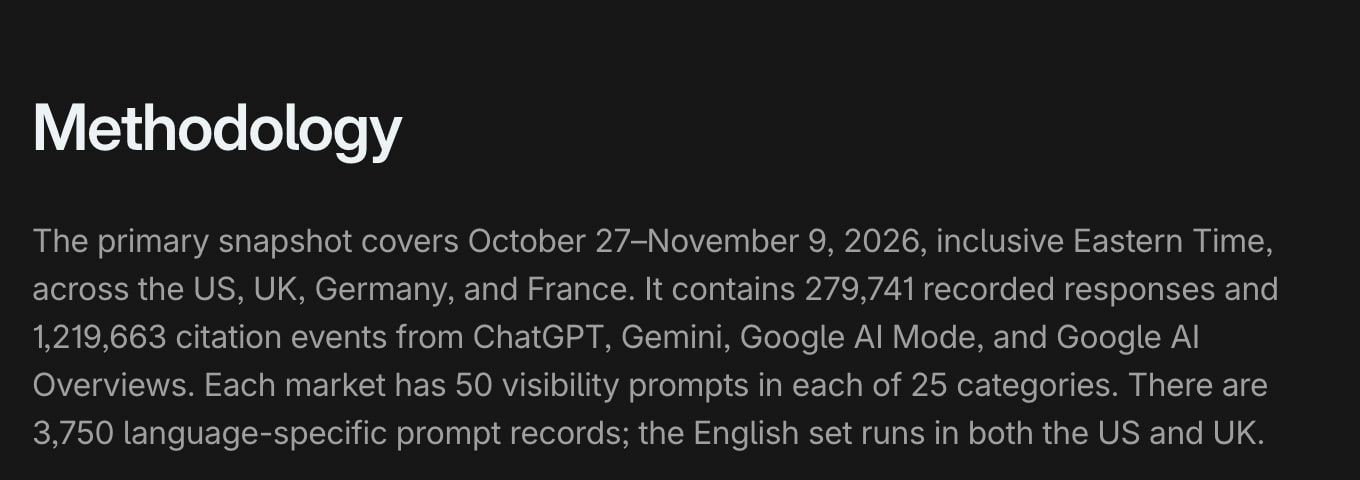
| Profound | Profound (AI-visibility tracking) | 27 Oct–9 Nov 2026; ChatGPT, Gemini, AI Mode, AI Overviews; US, UK, Germany, France | 279,741 responses; 25 categories; 50 prompts per category per market | Citations (1,219,663 events) |
| Meltwater | Meltwater (GenAI Lens) | 13–26 Oct 2026; nine assistants | 4 prompts | Mentions and citations; 7 of 9 assistants gave citations (2,878 pages) |
| Semrush | Semrush (AI-visibility tools) | September 2026 snapshot; AI Overviews, ChatGPT, Gemini, AI Mode; US | 10,514 answers; brand-named prompts removed | Mentions and citations |
Source: Profound and Meltwater pages read at the source; Semrush as reported by PPC Land. Read 23 Nov 2026. Scroll sideways for more columns.
Each study’s headline for sources, with its own numbers:
- Profound: the Forbes furniture guide was the most cited US furniture page at an 8.32% citation share, 2.9 times the next page, and 90.9% of answers citing it also named Wayfair.
- Meltwater: deal and affiliate sites (Blackfriday.com, RetailMeNot), finance and educational publishers, and tech media (CNET, PCMag) beat retailer sites. Meltwater’s counts: Blackfriday.com 94, Walmart.com 38, BestBuy.com 37.
- Semrush: in AI Overviews, Ashley Furniture was mentioned in 66.5% of 239 Black Friday furniture prompts against Walmart’s 13.4%. AI Overviews cited Reddit in 35.2% of tracked holiday prompts and 53.2% of Christmas gift prompts.
Can you add those numbers up? #
No. They use different engines, prompts, dates and markets, and each is run by a company that sells tracking or monitoring.
Profound ran 50 prompts per category in four markets, Meltwater ran four prompts across nine assistants, and Semrush took a September snapshot of unbranded US prompts. A percentage from one isn’t comparable with a percentage from another.
All three ended before the 19–21 November coupon-card reports, so none covers them. For those, see ChatGPT is showing coupon codes.
Last year’s Black Friday studies, Profound’s 2025 index and BrightEdge’s AI Overviews comparison, measured visibility and coverage in a different season, so I left them out. For the general most-cited list, see most-cited domains in AI answers.
Do seasonal pages really win? #
In one study’s examples, yes, but those are single retailers. Profound says a French retailer’s jewellery and watch pages (Ocarat) hold 7.00% of category citations against 0.44% for its general Black Friday page.
That is one retailer in one market, so I wouldn’t read it as a rate for seasonal pages. Profound’s other examples are also single cases: Bergfreunde’s Black Weekend page has 2.79% of German Outdoors citations, and a Times Union retailer calendar was first cited on its publication date, 28 October.
Where are the big retailers? #
Less visible in citations than you’d expect. Amazon is mentioned often, but amazon.com is missing from Meltwater’s 100 most-cited domains, and Gemini never cited it in Semrush’s data even though it named Amazon in 40.5% of prompts.
Meltwater has Amazon and Target in 45% of answers, with Walmart at 46%. Profound’s combined leaderboard puts Amazon first at 48.4%, which I read as a visibility score, not a citation count.
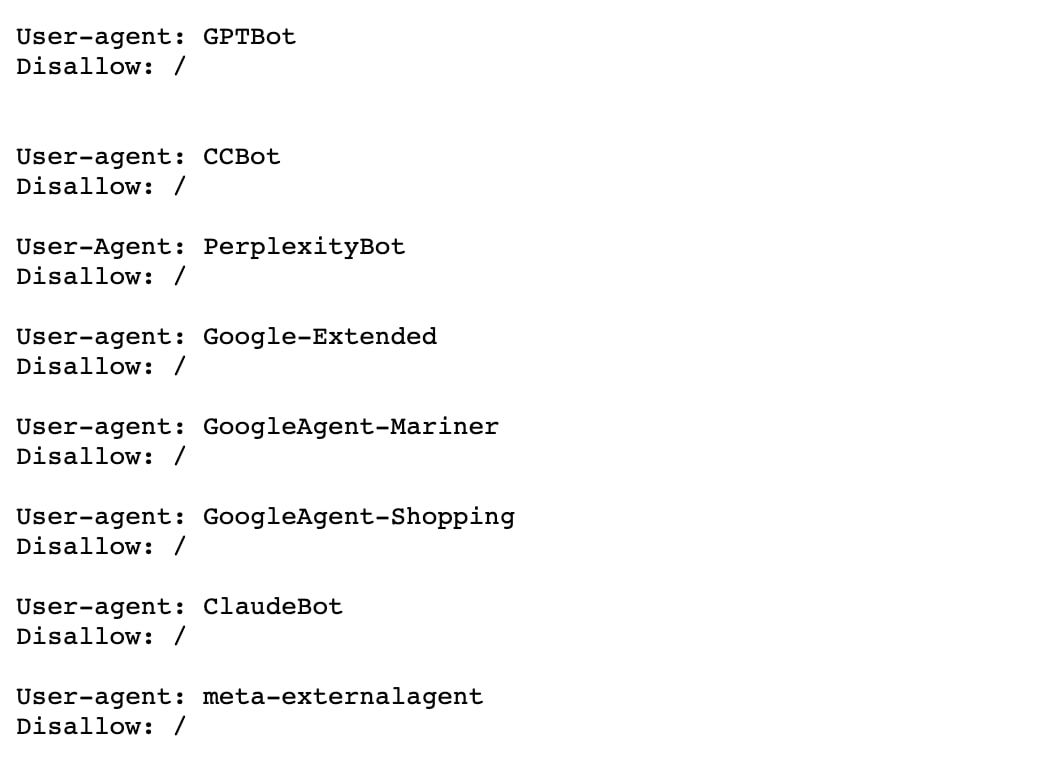
Semrush calls Amazon’s block on Google-Extended the “likely explanation”. On 23 November, amazon.com/robots.txt lists Disallow: / for Google-Extended, GPTBot, ClaudeBot, PerplexityBot and OAI-SearchBot. That shows the file; it doesn’t prove the cause, and robots.txt is advisory.
Does a citation mean a correct deal? #
No. Which? found ChatGPT identified the lowest price and retailer correctly for 8 of 25 products, and 68% of results had at least one issue.
That test was in the UK, on ChatGPT, and about prices, not sources. Meltwater adds that five of its nine assistants warned that advertised discounts may not be genuine.
What would a small shop put on the page? #
One category-level page with offer terms, dates and current prices. The advice below is the vendors’ own, so it comes with the usual caveat: all three sell the monitoring.
| Checklist item | What the studies say | Source |
|---|---|---|
| Offer terms next to the headline deal | Put offer conditions beside headline deals; list tiers, dates, eligibility, exclusions and return terms | Profound, Meltwater |
| One page per priority category | Organize seasonal pages around buying decisions; give priority categories their own page | Profound |
| Prices and stock in sync | Keep them aligned with your catalog; OpenAI says merchants are ranked on factors like "availability, price, quality" | Profound, OpenAI help |
| Keep it current | Keep an event hub current and publish mid-campaign; Meltwater says publish specifics well before the November shopper peak | Profound, Meltwater |
| Pitch confirmed pricing to cited guides | Send confirmed offers to publishers AI already cites in your category | Profound |
Source: Profound and Meltwater advice, OpenAI's shopping help page. Read 23 Nov 2026. All self-interested; none is a proven lift. Scroll sideways for more columns.
Google’s AI optimization guide says “There’s no ideal page length”, says Merchant Center feeds and Google Business Profiles “can help” products be visible in AI responses, and doesn’t mention seasonal or deal pages. If you run Google promotions, Merchant Center attaches them to product data, and US sale events need a promotion URL.
What should you check by hand? #
Pick 10 deal questions a customer would ask, run them in the engines you care about, and note which pages get cited and whether the deal is right. I’d do it twice this week and once after Cyber Monday on 30 November. That’s a routine I’d follow, not one I’ve done.
Answers are shifting, at least on one author’s prompts. Metehan Yesilyurt reports that on his tracked Black Friday prompts, ChatGPT’s classic product carousel is down about half since mid-October. His advice is to check how answers handle deals in your category, not only who gets cited.
If a tool ends up worth buying, how many prompts to track and how to measure AI visibility cover the next step.
So what would I do? #
Spend the week on one page, not a new tool. Citations don’t tell you the deal is right, and the studies can’t tell you which of their findings applies to your category.
- Today: build one category-level deals page with offer terms and dates.
- This week: send confirmed offers to the guide pages already cited in your category.
- Twice before Cyber Monday: run the same 10 deal prompts and write down what’s cited.
- After 30 November: decide whether a tracker is worth it.
I’ll update this post after Cyber Monday.
FAQ
Do AI answers cite retailers or publishers for Black Friday?
Both, depending on the study. Meltwater found deal sites, finance publishers and tech media ahead of retailer sites, while Profound found brand hubs strong in their own categories. The studies use different engines, prompts and dates, so I wouldn't average them.
Should I build a Black Friday landing page?
A category-level page with offer terms and dates is what the studies' own advice points to, and it's cheap. But the evidence is observational and comes from companies that sell monitoring, so treat it as a sensible bet, not a proven lift.
How fast can a new page be cited?
Profound reports that a Times Union retailer calendar was first cited on its publication date, 28 October 2026. That's one case, not a typical delay.
Is Amazon missing from AI answers?
Not from mentions. Amazon is mentioned often, but amazon.com isn't among Meltwater's 100 most-cited domains, and Gemini never cited it in Semrush's data. Amazon's robots.txt blocks several AI crawlers, but nobody has proven that's the cause.
Can I trust the deals AI answers show?
Not blindly. Which? found ChatGPT gave the correct lowest price and retailer for 8 of 25 products, and five of Meltwater's nine assistants warned that advertised discounts may not be genuine.
Who ran these studies, and do they sell something?
All three come from companies that sell AI-visibility tools or monitoring: Profound, Meltwater and Semrush. I found no Black Friday citation study from anyone without a tool to sell, so read each as a vendor's data.
Sources
11 sources, accessed .
Official pricing, docs, changelogs and status pages 4
News and press 1
Other blogs 5
- Profound (sells AI-visibility tracking): Black Friday in AI Search 2026, 13 Nov 2026
- Profound: the Black Friday Index, Dec 2025
- Meltwater (sells GenAI Lens): Black Friday AI recommendations, 30 Oct 2026
- BrightEdge (sells AI search tools): Black Friday 2024 vs 2025, 27 Nov 2025
- Metehan Yesilyurt (GEO newsletter): ChatGPT is giving out Black Friday deals, 19 Nov 2026
Last updated: 23 November 2026. Facts verified 23 Nov 2026. Researched and drafted with AI tools; owner review is pending.


